
The Great Sphinx – The Immortal Sculpture Wonder of Egypt
In the blazing sun of the Giza desert, the Sphinx – a giant sculpture still stands tall, defying the ravages of time. It is the symbol of the mysterious country of Egypt, one of the wonders of the ancient world that still exists today. Let’s explore this impressive work with Green Environment!
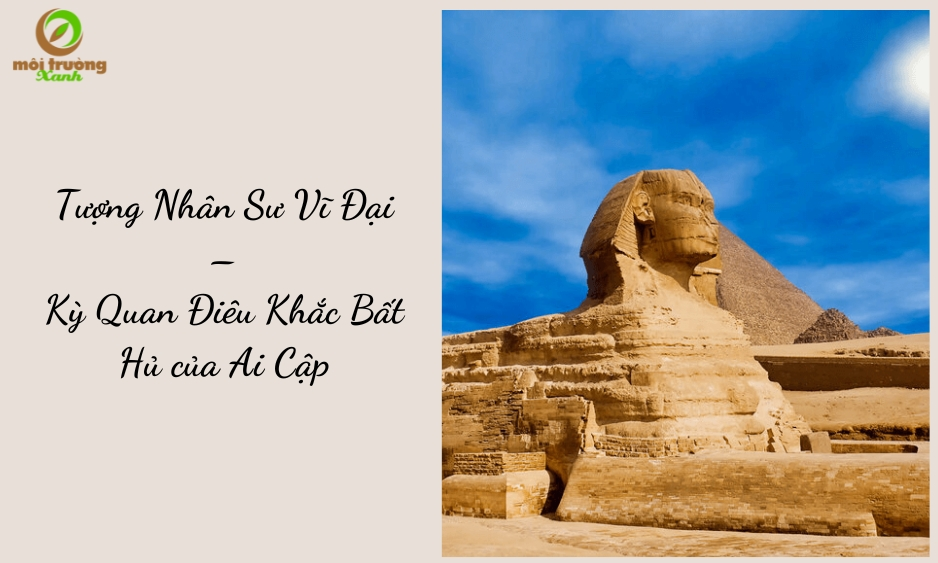
The Sphinx – Egypt
The statue is sculpted in the shape of a sphinx, created from a giant limestone block. With a height of 20m and a length of 73m, the statue has the shape of a lying lion, but has the face of a man, believed to be the face of an ancient Egyptian emperor.

Carved from limestone, a very popular stone in Egypt. Limestone is a hard and durable material, which has helped this work last through thousands of years of history. The carving process had to be extremely meticulous and elaborate, with the rudimentary tools of that time. Every line, every detail on the statue was meticulously carved, demonstrating the wonderful sculpting talent of ancient people.
The highlight of the statue is the benevolent face, a blend of human beauty and the majesty of a lion. On the calm face, the statue has a gentle smile with large, deep and gentle eyes. The body of the statue is in the shape of a lying lion, expressing the strength and courage of an emperor. With a strong body, prominent tendons, a long tail extending behind and sharp feet and claws.
The statue carries both the kindness of a human and the strength of a wild animal, creating an impressive and highly symbolic sculpture.
The Great Sphinx is not simply a sculpture, but also a great architectural work, demonstrating the advanced construction level of the ancient Egyptians.
With a giant size of 20m high and 73m long, the construction of the statue required a large investment in human resources, materials and technology. According to archaeologists, thousands of people participated in the construction of this project. In ancient times, by using rudimentary tools such as crowbars, ropes, to push and applying the most advanced mechanical and technical knowledge of that time.
Even with only rudimentary tools, ancient people applied extremely sophisticated construction techniques to complete the statue. Giant blocks of stone were carved from the quarry, using a system of levers, slides and wheels to move the stone blocks while applying the principles of balance and proportion to ensure the stability of the statue. The project is a testament to the architectural talent and sophisticated engineering of the ancient Egyptians.
The timeless aesthetics of a world wonder
In addition to its giant size, the statue also attracts viewers because of its high aesthetic beauty. The Ancient Egyptians had aesthetic standards that were ahead of their time, building statues with balanced proportions, harmonious head and body, delicately carved lines, vivid, and rich decorative colors (although faded over time).

The Sphinx is an outstanding sculpture, combining scale and aesthetics, making it a cultural icon of Egypt, a source of inspiration for many countries and with copies around the world, from Las Vegas, Nevada, to Lanzhou, China.
The statue contains many mysteries about its origin and meaning, causing archaeologists to constantly hypothesize and debate.
Origin of the statue
Archaeologists believe that the statue was built around 2575-2150 BC, during Egypt’s Old Kingdom period.
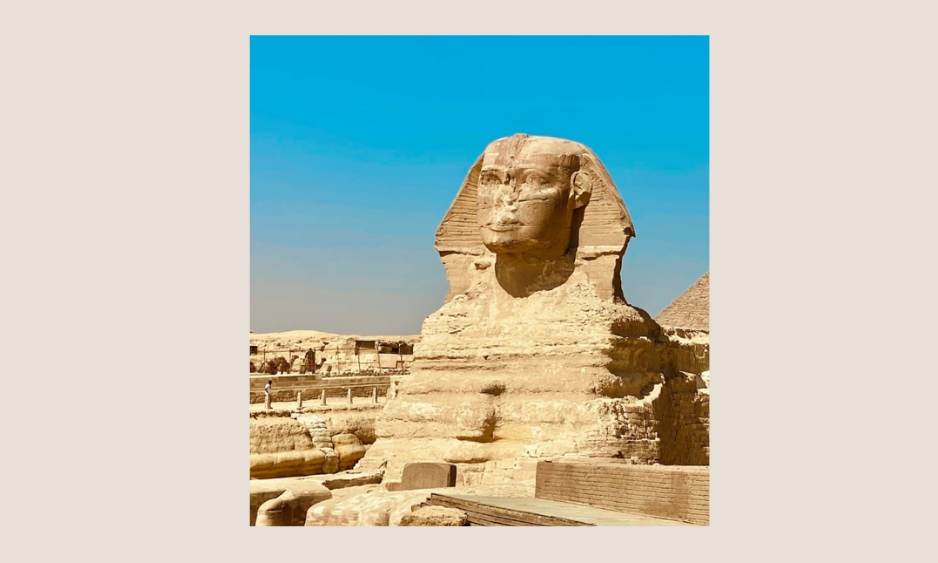
Some theories suggest that the statue was created during the reign of King Khufu, who is believed to have built the Great Pyramid at Giza. This idea is supported by the fact that the statue has a face similar to other king statues from the same period.
The statue is believed to be a symbol of the power and authority of the ancient Egyptian emperor. The combination of the image of a lion and a human face may symbolize the king’s dominance and protection. Lions are often considered to be strong and majestic animals and the human face represents kindness and wisdom. The statue is not just a sculpture, but also contains many profound meanings about ancient culture and history.
The Mystery of the Sphinx’s Construction
The construction of the Sphinx, with its enormous scale and sophisticated techniques, has raised many questions for historians and architects.
One of the biggest mysteries about the Sphinx is the method of moving the huge limestone blocks from the quarry to the construction site. Although there is no concrete evidence, there are many theories about the use of slides, wheels and levers to move the blocks. Transporting thousands of tons of stone across desert terrain was a huge challenge for the technology of that era.
Although a lot of effort and resources were invested in the construction of the Sphinx, the project was never completed as originally planned. There are theories that accidents during the construction process or political changes caused the project to be abandoned. However, the beauty and appeal of the Sphinx still exists and makes a strong impression to this day. The statue is not only a sculpture, but also a great mystery of ancient history and art.
Conclusion
In this article, we have learned about the Great Sphinx – one of the immortal sculptural wonders of Egypt. The statue is not only a great work of art, but also a testament to the progress of ancient architecture and technology. The mystery of the origin, meaning and construction process of the statue is still a hot topic for historical researchers and explorers.
The Great Sphinx continues to be an attractive destination for tourists from all over the world, not only because of its beauty and scale, but also because of its mysterious appeal and immense history. Hopefully, the article by Green Environment has helped you better understand the Sphinx and discover more about the magical beauty of ancient Egyptian art.